


- Why Is Bagamoyo a Famous Historical Site in Tanzania?
Published by Family Ties Inn | Bagamoyo, Tanzania
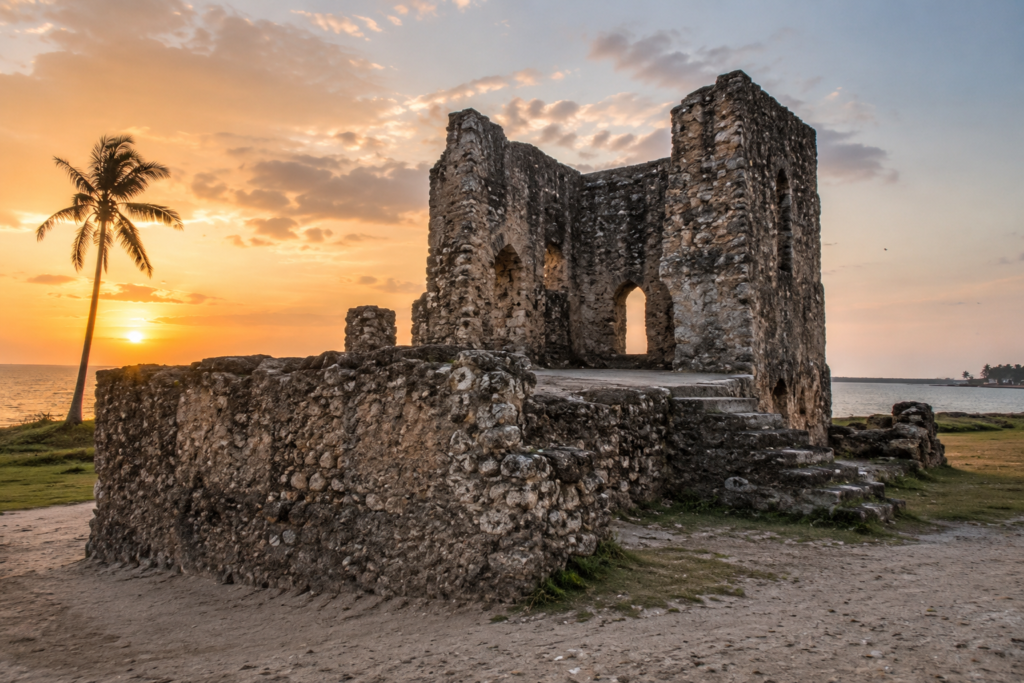
Stone ruins of the Old Fort in Bagamoyo, Tanzania at sunset
If you’ve ever wondered why Bagamoyo draws historians, archaeologists, and curious travellers from all over the world — you’re not alone. This quiet coastal town just 75 kilometres north of Dar es Salaam holds more history per square metre than almost anywhere else in East Africa.
In this post, we’ll take you through exactly why Bagamoyo is considered one of Tanzania’s most important historical sites, what you can see when you visit, and how to make the most of your trip by staying at Family Ties Inn.
What Does “Bagamoyo” Mean?
“Bagamoyo” comes from the Swahili phrase bwaga moyo — meaning “lay down your heart” or “here my heart rests.”
For the enslaved people who passed through this town, that phrase carried devastating meaning. After weeks or months of forced marching from the interior of Africa, this was the last point on the mainland before being loaded onto dhows bound for Zanzibar and beyond. For many, it was the last place they would ever stand on African soil.
A Hub of the Slave and Ivory Trade
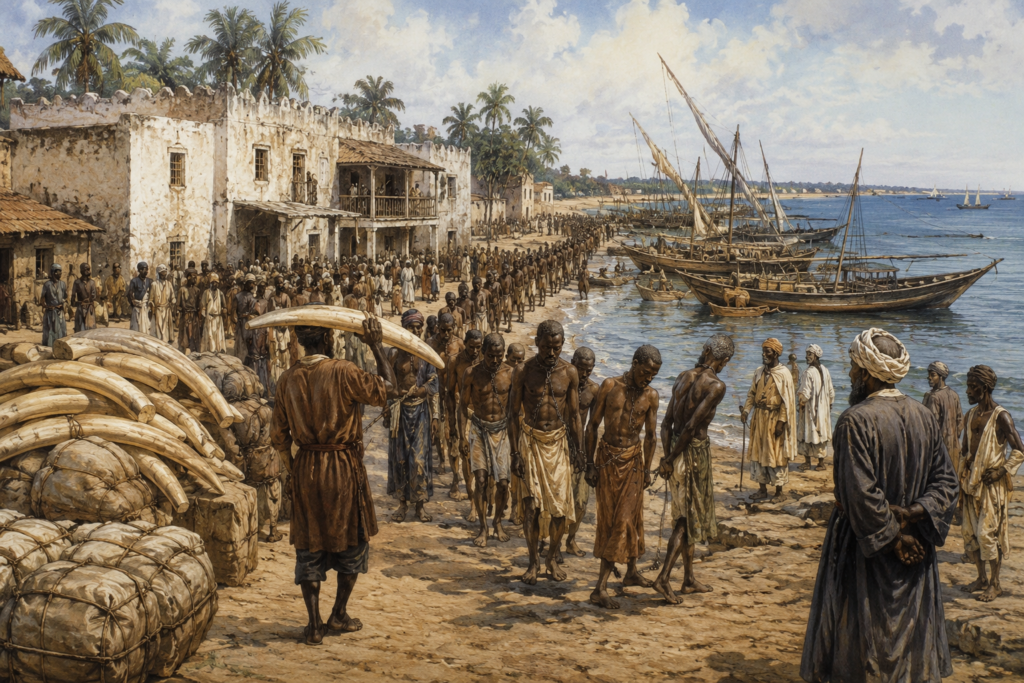
Historical illustration of ivory and slave caravans arriving at the Bagamoyo coast in Tanzania
Bagamoyo’s rise to prominence began in the late 18th century when Arab and Swahili traders established it as the most important trading port on the East African coast.
For nearly a century, Bagamoyo served as the penultimate stop for slave and ivory caravans that had travelled on foot all the way from Lake Tanganyika — a journey of over 1,200 kilometres through dense forest, savannah, and highland terrain. Caravans carrying enslaved people and ivory would converge here before crossing the narrow channel to Zanzibar, where goods (and people) were sold at the infamous Zanzibar Slave Market.
At its peak, Bagamoyo was one of the wealthiest and busiest ports in the entire Indian Ocean trading network, with merchants from Oman, India, and Persia establishing trading houses along its waterfront.
German Colonial History: The Capital That Was
What makes Bagamoyo even more remarkable is that it was once the capital of German East Africa — the colonial territory that is now Tanzania, Rwanda, and Burundi.
When Germany colonised the region in the 1880s, Bagamoyo became the administrative and commercial centre of their East African empire. The Germans built roads, established a customs house, and constructed the Old Boma (fort), which still stands today.
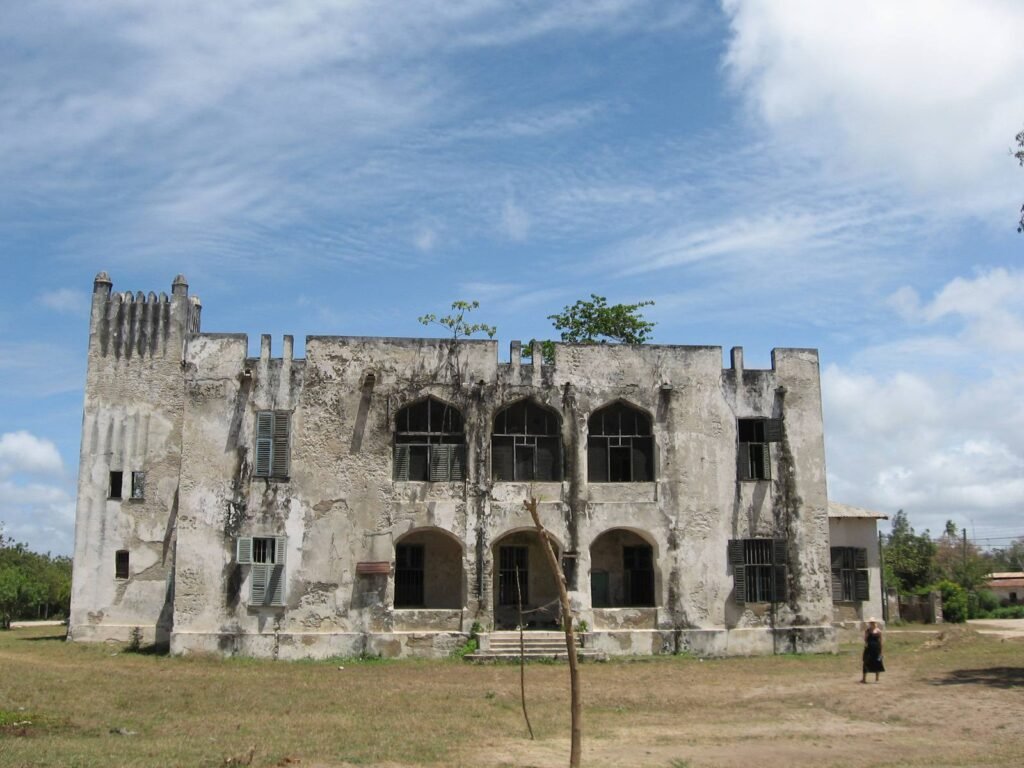
Old German Boma building in Bagamoyo, a remnant of colonial architecture in Tanzania
However, Bagamoyo’s reign as capital was short-lived. In 1891, the Germans shifted the capital south to Dar es Salaam, citing its deeper harbour and better development potential. Almost overnight, Bagamoyo went from being one of the most important cities in East Africa to a quiet backwater — and in doing so, it was frozen in time.
That “frozen” quality is exactly what makes it so extraordinary to visit today. The colonial-era buildings, Arabic architecture, and ancient streets remain largely intact.
The Catholic Mission and David Livingstone
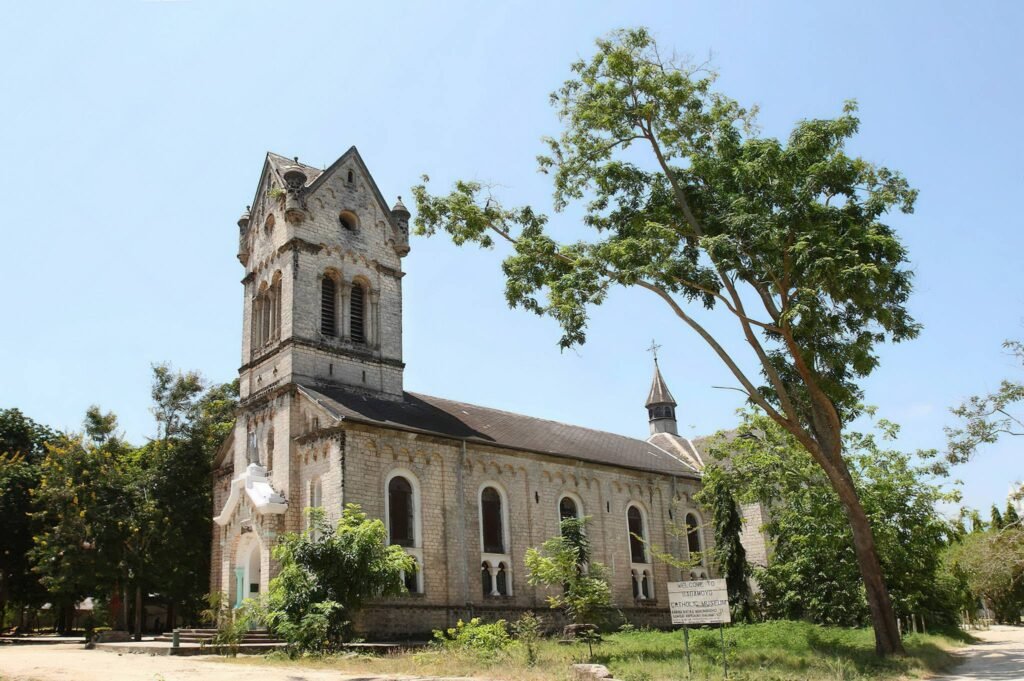
The Catholic Mission and church in Bagamoyo, where David Livingstone’s body rested
One of Bagamoyo’s most poignant landmarks is the Holy Ghost Catholic Mission, established by French missionaries in 1868. The mission played a crucial dual role: it was both a centre for freeing and educating formerly enslaved people and a base for European Christian missionaries heading into the African interior.
This is also where the body of the legendary Scottish explorer and missionary Dr. David Livingstone was brought in 1874. After Livingstone died near Lake Bangweulu in present-day Zambia, his loyal companions carried his preserved body for months across difficult terrain to reach Bagamoyo. His remains rested at the mission before being shipped to Britain, where he was buried at Westminster Abbey.
The mission’s church, museum, and chapel still stand and are open to visitors today — offering a deeply moving connection to one of history’s most significant chapters.
The Old Arab Fort and Stone Town Architecture
Bagamoyo’s Stone Town — distinct from Zanzibar’s more famous Stone Town — is a UNESCO-nominated area of winding lanes, coral stone buildings, carved wooden doors, and crumbling merchant houses. Walking through it is like stepping back into the 19th century.
The Old Arab Fort, built in the early 1800s, served as a garrison and administrative centre for Omani Arab traders who dominated the coast at the time. Though partially in ruins, it remains one of the most photographed landmarks in Bagamoyo.
The Indian Ocean Coastline and Dhow Culture
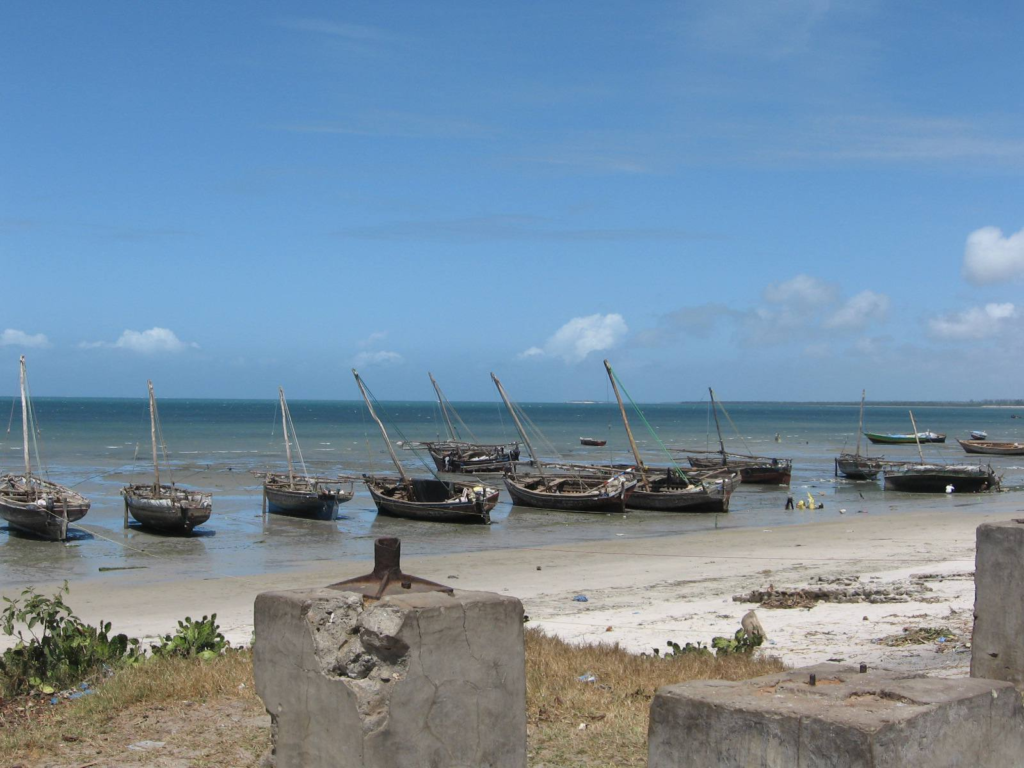
Dhow boats on the Indian Ocean shoreline in Bagamoyo, Tanzania
Bagamoyo’s history didn’t happen in isolation — it was shaped by the sea. The town’s position on the Indian Ocean placed it at the crossroads of global trade routes connecting East Africa to Arabia, India, Persia, and beyond.
Dhow boats — the traditional wooden sailing vessels of the Indian Ocean — have been arriving and departing from Bagamoyo’s shores for centuries. Today, you can still watch local fishermen setting out in wooden dhows at dawn, a scene that has changed remarkably little over hundreds of years.
The beach itself is beautiful: wide, palm-fringed, and far less crowded than the tourist beaches further north. It’s an ideal place to sit, reflect, and let the weight of everything you’ve just learned sink in.
What to See in Bagamoyo: A Quick Visitor Guide
Here’s a summary of the key historical sites to visit during your stay:
-
- Holy Ghost Catholic Mission & Museum — The oldest Catholic church in Tanzania; where Livingstone’s body rested
-
- Old German Boma (Fort) — German colonial-era administrative building, now housing a museum
-
- Old Arab Fort — 19th-century Omani fortification near the waterfront
-
- The Slave Market Memorial Site — A sobering reminder of the town’s role in the slave trade
-
- Bagamoyo Stone Town — UNESCO-nominated historic district with Arabic and Swahili architecture
-
- Bagamoyo Beach — Quiet, beautiful Indian Ocean shoreline with traditional dhow boats
-
- Kaole Ruins — 13th-century Shirazi mosque ruins located just south of Bagamoyo town
Accommodation in Bagamoyo: Where to Stay
Exploring a town this rich in history deserves a comfortable, welcoming place to return to at the end of the day. Bagamoyo offers a wide range of accommodation to suit every type of traveller, from beachfront resorts with uninterrupted ocean views to boutique lodges, simple guesthouses, and budget-friendly stays. Whichever way you like to travel, there’s a place here that fits.
Beachfront Hotels & Resorts
For travellers who want the Indian Ocean right outside their door, Bagamoyo’s beachfront hotels and resorts offer sea views, direct beach access, and on-site dining. These properties tend to suit couples on a romantic getaway, sun-and-sand holidaymakers, and anyone who wants the full coastal experience as a base for exploring the town’s history.
Boutique Lodges & Guesthouses
Smaller boutique lodges and locally run guesthouses are scattered throughout Bagamoyo and just outside the town centre. They typically offer a more personal, intimate stay with character-filled rooms and closer interaction with hosts, making them a good fit for travellers who prefer a homely atmosphere over a large hotel setup.
Budget Accommodation
Backpackers, solo travellers, and anyone keeping a tighter budget will find simple, no-frills guesthouses and budget lodgings around town. These usually offer clean, basic rooms within walking or short driving distance of Bagamoyo’s main attractions, without the extra cost of resort-style amenities.
Peaceful, Family-Friendly Properties Away from the Beachfront
For families and travellers who prefer a quieter setting, a number of properties sit just off the busy beachfront in garden surroundings, while still being within easy reach of the beach and the town’s historical sites. These tend to suit families with children, groups, and guests who want a calmer base without giving up convenient access to Bagamoyo’s attractions.
Recommended Stay: Family Ties Inn
Among the family-friendly options in this category, Family Ties Inn is a recommended choice. Set on the Bagamoyo coastline in Mapinga, just a short drive from the town’s historical sites, it’s well suited to families, couples, business travellers, and groups looking for a peaceful, comfortable, and affordable stay while remaining within easy reach of Bagamoyo’s attractions.
The property offers comfortable rooms (including beachfront and garden options), an on-site restaurant serving Tanzanian coastal cuisine, a dedicated venue for events and conferences, free on-site parking, relaxing garden and beachfront surroundings, and the kind of friendly hospitality that makes it easy to arrange local guides, tours, and transfers to sites like Kaole Ruins and the Bagamoyo town centre.
What’s Included at Family Ties Inn
-
- Direct beach access — swim, stroll, or simply watch the dhows sail by
-
- On-site restaurant serving Tanzanian coastal cuisine — fresh seafood, local dishes, and continental options
-
- Dedicated event and conference venue for business stays, meetings, or celebrations
-
- Free parking on-site
-
- Knowledgeable staff who can help arrange guided tours of Bagamoyo’s historical sites
-
- Airport and city transfers available on request
Booking Guide
Whichever type of accommodation you choose, it’s worth comparing prices, reading recent guest reviews, and checking real-time availability before booking — rates and room availability in Bagamoyo can shift seasonally. You can book Family Ties Inn directly through the official website, or compare it alongside other Bagamoyo properties on trusted travel platforms.
Explore Family Ties Inn: Rooms · Restaurant · Event Venue ·Contact
Compare & Book: Book on te followig sites · Booking.com · TripAdvisor · Hotels.com · Agoda · View on Google Maps
Note: Expedia listings for Bagamoyo properties are limited at the time of writing — check the platforms above first for the most reliable availability and pricing.
Kaole Ruins: Tanzania’s Oldest Archaeological Site
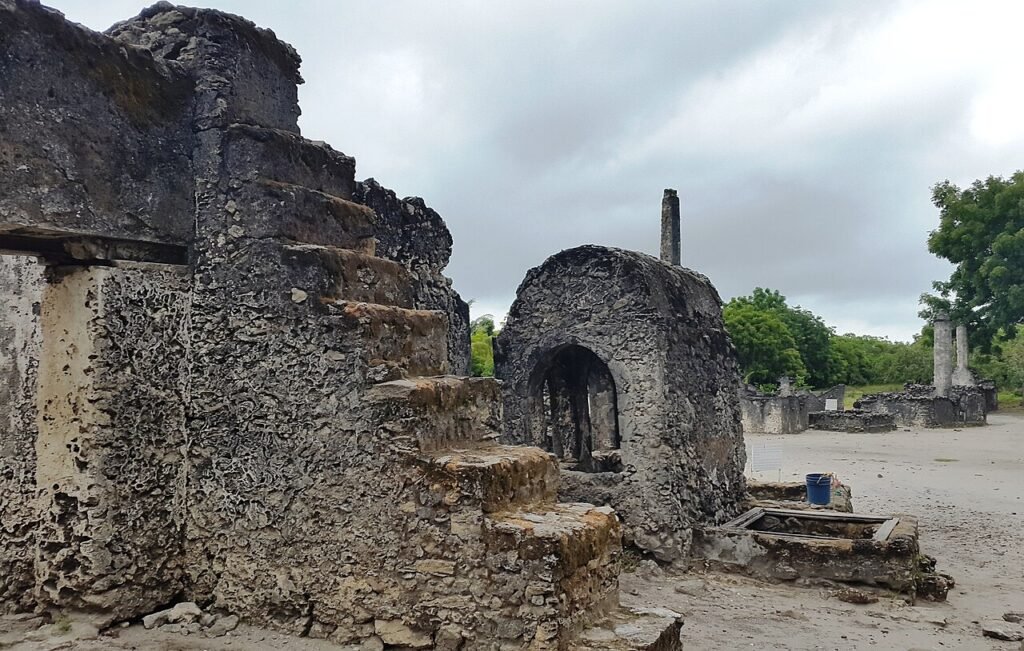
Kaole Ruins in Bagamoyo District
Just 5 kilometres south of Bagamoyo town centre lie the Kaole Ruins — one of the most significant and least visited archaeological sites in East Africa. Dating back to the 13th century, these are the remains of a Shirazi settlement built by Persian traders who established themselves along the East African coast and became a cornerstone of the region’s Swahili civilisation.
The site contains the ruins of two mosques and over 40 carved tombs, some adorned with Chinese porcelain embedded in the stonework
evidence of just how far Bagamoyo’s ancient trade networks stretched. There’s also a medieval well that provided fresh water to the settlement for centuries. Kaole is a protected national monument and one of the few places in Tanzania where you can stand directly beside ruins from the 1200s with almost no barrier between you and history.
A visit takes 1–2 hours and is best done with a local guide who can bring the site to life. Family Ties Inn staff can help arrange a guide for you.
How to Get to Bagamoyo from Dar es Salaam
Bagamoyo is located approximately 75 kilometres north of Dar es Salaam, making it an easy day trip or short overnight destination from the city. Here are your main travel options:
-
- Private car or taxi: The most comfortable option. Drive north on the Bagamoyo Road via Tegeta and Wazo Hill. Budget 1.5–2 hours depending on Dar es Salaam traffic. Bolt and InDriver operate in the city if you need a taxi from central Dar.
-
- Dalla-dalla (local minibus): Take a dalla-dalla from Mwenge or Tegeta bus stand heading towards Bagamoyo. Budget 2–3 hours and expect a more local, immersive experience. Very affordable, though not recommended if you’re carrying a lot of luggage.
-
- Transfer arranged through Family Ties Inn: We can arrange comfortable airport or city pickups on request. Contact us when booking to confirm transfer details and pricing.
Best Time to Visit Bagamoyo
Bagamoyo can be visited year-round, but there are two dry seasons that offer the best conditions for sightseeing and beach time:
-
- June to October (Long Dry Season): The most popular time to visit Tanzania’s coast. Cooler temperatures, low humidity, and clear skies make it ideal for walking the historical sites and spending time on the beach. Accommodation books up faster during this period, so reserve early.
-
- December to March (Short Dry Season): Warm and mostly sunny, with occasional light showers. A great time to visit if you prefer fewer crowds, and the Indian Ocean is at its calmest for swimming.
-
- April to May & November (Rainy Seasons): Expect heavier rainfall during the long rains (April–May) and short rains (November). The town is quieter and accommodation is cheaper, but outdoor sightseeing can be disrupted. Pack accordingly if visiting during these months.
Final Thoughts
Bagamoyo is not a typical tourist destination. It doesn’t have the polished resorts or organised safaris of other parts of Tanzania. What it has is something rarer: authentic, layered, still-breathing history that you can walk through, touch, and feel.
From the slave trade caravans of the 18th century to German colonialism, from David Livingstone to ancient Arabic merchant culture — this is a place where East Africa’s past is not locked behind glass. It’s right there, on the streets, in the ruins, and in the sea breeze coming off the Indian Ocean.
Come and see it for yourself.
Family Ties Inn | Bagamoyo, Tanzania

Leave A Comment